Last updated: June 20, 2026 | Reviewed for accuracy by the AiZonePro editorial team
Disclaimer: This article is for educational purposes only and is not financial advice. Always do your own research or consult a licensed financial advisor before investing.
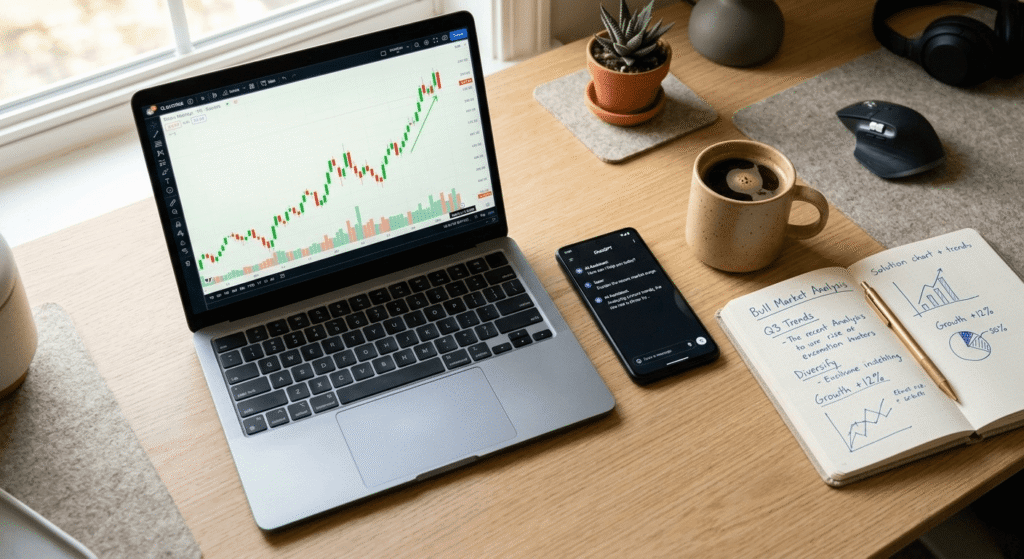
If you’ve used ChatGPT even once this year, you’ve probably noticed the same headline popping up everywhere: OpenAI IPO 2026. Maybe you saw it on a finance YouTube channel, maybe a friend mentioned it, or maybe you’re just curious whether this changes anything for the app you use every day to write emails, study, or earn a little extra income online.
If you are exploring AI for the first time, this free AI tools for beginners 2026 step-by-step mobile guide can help you start with simple tools and practical examples.
Here’s the honest answer: yes, it matters — but probably not in the dramatic way most headlines suggest. In this guide, we’ll break down the OpenAI IPO 2026 story in plain language, with real numbers, real sources, and a section specifically for readers in Pakistan and across Asia who are wondering whether any of this is even accessible to them.
Quick Summary Table
| Question | Quick Answer |
|---|---|
| Has OpenAI officially gone public? | No — it confidentially filed IPO paperwork with US regulators in mid-2026 |
| Confirmed IPO date? | None yet; reporting points to late 2026, possibly Q4 |
| Estimated valuation | Roughly $850 billion to $1 trillion |
| Is OpenAI profitable? | No, the company is still losing billions annually |
| Will ChatGPT’s free version disappear? | No — it’s unlikely, since the free tier is part of what makes OpenAI attractive to investors. |
| Can beginners in Pakistan/Asia invest? | Not before listing; possible afterward through international brokers, with conditions |
What Is the OpenAI IPO, in Simple Terms?
An IPO (Initial Public Offering) is the process where a private company sells shares of itself to the public for the first time, allowing ordinary people to legally own a small piece of it through the stock market.
Until recently, OpenAI was entirely private. Only large investors, venture capital firms, and select employees could hold equity. That changed when OpenAI confirmed it had submitted a confidential registration filing with the U.S. Securities and Exchange Commission, working with major investment banks to manage the process toward a possible public listing.
OpenAI itself has been cautious about timing. In a public statement, the company said it had not decided on timing yet, noting that some things are easier to do as a private company, but that filing keeps the option open to go public sooner if that turns out to be the better path.
That single detail tells you a lot: this isn’t a confirmed countdown. It’s a company preparing its options.
Why Is OpenAI Going Public Now?
This is the part most coverage skips past, but it’s the key to understanding everything else.
Running AI models at scale is extremely expensive. Every chat response, every image generated, and every API call consumes real computing power, and that cost has been climbing fast. Industry analysis has pointed to OpenAI’s inference costs roughly quadrupling in a single year, which squeezed profit margins even as revenue grew. That’s unusual — most software companies get cheaper to run per user as they scale, not more expensive.
On top of rising operating costs, OpenAI has committed to enormous, long-term infrastructure spending — reportedly exceeding $400 billion over multiple years for data center and computing capacity tied to its Stargate project. Going public is one of the most direct ways to raise the kind of capital that supports commitments at that scale, while also reducing reliance on any single backer like Microsoft.
In short: OpenAI’s ambitions are bigger than its current cash flow can support alone, and a public listing helps close that gap.
At the same time, AI is creating new opportunities for beginners who want to learn skills, freelance, or build online income using these technologies. Read this guide on how to start AI freelancing in 2026 with no experience, no laptop, and no investment.
OpenAI IPO Valuation and Key Numbers

| Metric | Reported Figure | Source Basis |
|---|---|---|
| Estimated valuation | $850 billion–$1 trillion | Multiple financial outlets, mid-2026 reporting |
| Weekly active ChatGPT users | Around 900 million | Company statements, early 2026 |
| Paying individual subscribers | Roughly 50 million | Industry analysis |
| Paying business users | Around 9 million | Industry analysis |
| Projected 2026 revenue | Roughly $25–30 billion | Analyst and CFO statements |
| Projected 2026 net loss | Around $14 billion | Reported financial projections |
| Expected cash-flow positive year | Around 2030 | Company guidance to investors |
These figures shift slightly between reports because OpenAI’s financials aren’t fully public yet — confidential filings stay private until close to the actual listing. Treat any specific number as a reported estimate, not a confirmed fact, until OpenAI publishes its official prospectus.
What Does This Mean for Regular ChatGPT Users?
This is probably why you clicked on this article, so let’s get specific.

Going public typically increases pressure on a company to show steady revenue growth and a believable path to profitability. For a product like ChatGPT, that pressure tends to show up in a few realistic ways over time:
- New pricing tiers or feature bundles rather than blanket price hikes
- Heavier investment in enterprise and business tools, since corporate customers generate far more revenue per account than individual subscribers
- Possible advertising experiments, a common move for public companies trying to diversify income beyond subscriptions
- The free tier staying alive, because a massive global user base is itself a valuable growth metric that supports the company’s public story
With more AI tools entering the market, beginners often compare platforms before choosing one. This best free AI tools in Pakistan 2026 (ChatGPT vs Gemini vs Claude) comparison explains the differences.
Nothing here is locked in, and OpenAI hasn’t tied any specific pricing announcement directly to the IPO. But understanding the underlying business pressure helps you make sense of changes when they happen, instead of being surprised by them.
OpenAI vs Anthropic: A Side-by-Side Look
OpenAI isn’t racing toward the public markets alone. Anthropic, the company behind the Claude AI assistant, filed for its own IPO on June 1, 2026 — just before OpenAI’s confidential filing became public knowledge.
| Comparison | OpenAI | Anthropic |
|---|---|---|
| Flagship product | ChatGPT | Claude |
| Consumer user base | Much larger (hundreds of millions weekly) | Smaller, but growing steadily |
| Enterprise AI spending share | Recently lost its long-held lead | Overtook OpenAI in enterprise spending in April 2026 |
| IPO filing status | Confidential filing submitted, June 2026 | Filed publicly, June 1, 2026 |
For everyday users, this rivalry is good news in one specific way: competition between the two labs tends to push faster updates, better free-tier features, and more competitive pricing, at least in the near term.
Can Beginners in Pakistan and Asia Actually Invest?
This is the section most international coverage skips entirely, and it’s exactly where AiZonePro wants to give you a straight answer.

Before the IPO (right now): Pre-IPO access is essentially closed to regular individual investors anywhere in the world. It’s limited to institutional investors, accredited investors meeting strict income or net-worth thresholds, and existing OpenAI employees or early backers. If anyone offers you “exclusive pre-IPO OpenAI shares” through social media or messaging apps, treat it as a scam — this kind of offer is a common fraud pattern around major IPOs.
Instead of chasing risky offers, many beginners are focusing on learning practical AI skills and exploring realistic online opportunities.
After the IPO (once shares list publicly): Once OpenAI shares begin trading on a US exchange, the door opens wider, but a few realities apply for readers in Pakistan and Asia specifically:
- You’ll need a brokerage account that supports international/US stock trading. Several global apps used by Pakistani investors offer this, though availability and fees vary, so compare options before committing.
- Currency conversion matters. Buying US-listed shares from Pakistan means converting PKR to USD, and exchange rate movement can affect your real returns independently of the stock price.
- Minimum investment amounts and documentation requirements (like proof of income or a tax ID) differ by platform, so check requirements early rather than after deciding to invest.
- Diversification matters more than chasing one hyped stock. A single trillion-dollar valuation doesn’t guarantee strong returns, especially for a company that isn’t yet profitable.
If you’re new to investing altogether, it’s worth learning the basics of brokerage accounts and risk management before putting money into any single IPO, no matter how famous the company is.
The Bigger Picture: What This Signals for AI’s Future
Beyond the dollar figures, the OpenAI IPO 2026 story marks a turning point: artificial intelligence is shifting from an experimental technology into a mainstream financial and economic force that ordinary investors, not just venture capitalists, will eventually be able to participate in.
For beginners exploring AI tools to study, freelance, or build an online income, this is also a signal that investment in the AI space isn’t slowing down. Increased public and investor attention historically pushes companies toward faster innovation and more competitive, more accessible products — which is good news if you’re someone using these tools to learn or earn, not just to invest.
For beginners who want to test AI without expensive equipment, these best free AI tools that work on Android in 2026 show how much can be done from a smartphone.
People Also Ask (FAQ Section)
1. What is the OpenAI IPO 2026? It’s OpenAI’s move toward becoming a publicly traded company after confidentially filing IPO paperwork with US regulators in 2026, which would eventually let the public buy shares.
2. When exactly will the OpenAI IPO happen? No official date is confirmed. Reporting points toward a possible listing in the second half of 2026, but OpenAI has publicly said it hasn’t finalized timing.
3. Will ChatGPT become paid-only after the IPO? There’s no indication of this. A free tier is likely to stay because OpenAI’s large user base supports its growth story, though premium features could keep evolving.
4. Is OpenAI currently profitable? No. Despite tens of billions in annual revenue, OpenAI is still operating at a significant loss and isn’t expected to be cash-flow positive for several more years.
5. Can someone in Pakistan invest in the OpenAI IPO? Not before the listing — pre-IPO access is limited to large institutional and accredited investors. After listing, international brokerage platforms may allow access, depending on the platform and local regulations.
6. What’s the difference between the OpenAI IPO and the Anthropic IPO? Both are pursuing public listings around the same time. OpenAI has a larger consumer base through ChatGPT, while Anthropic recently took the lead in enterprise AI spending.
7. Why is OpenAI’s valuation so high if it’s losing money? The high price tag isn’t really about today’s numbers — it’s investors placing a bet on where AI is heading over the next several years, even with profitability still a long way off.
8. Is it risky for beginners to invest in AI company IPOs? Yes, like any investment. IPOs are often volatile in their first months, and beginners should research thoroughly and avoid investing money they can’t afford to lose.
Conclusion: What Should You Actually Do With This Information?
The OpenAI IPO 2026 isn’t just a finance headline — it’s a preview of how AI companies will be funded, scrutinized, and held accountable going forward. For ChatGPT users, expect gradual product and pricing evolution rather than overnight change. For beginner investors, especially in Pakistan and across Asia, the realistic move right now is to stay informed, understand the access barriers that exist before and after listing, and avoid rushing into pre-IPO offers that almost certainly aren’t legitimate.
If you are interested in turning AI knowledge into practical results, explore these 5 free AI tools that actually work in 2026 without VPN or credit card.
As AI keeps moving deeper into everyday work, learning, and income opportunities, stories like this aren’t just background noise — they’re a useful signal of where the next few years of technology and opportunity are headed. Keep this page bookmarked; we’ll update it as OpenAI’s IPO timeline becomes official.