
Last Updated: July 2026 | Written by Muhammad Ismail, Founder of AiZonePro.com

New AI tools launch almost every week, and not all of them are what they claim to be. If you’re a beginner in Pakistan exploring free AI tools for studying, freelancing, or content creation, that little hesitation before entering your email or card details is worth trusting. This free AI tools scam checklist walks you through 10 practical checks — each one taking less than a minute — so you can separate a genuine free tool from a trap before you ever sign up.
By the end of this free AI tools scam checklist, you’ll know exactly which signals mean “proceed” and which mean “walk away,” and you’ll be able to protect your email, phone number, and JazzCash or Easypaisa details from tools that were never really free in the first place.
Quick Answer: How Do You Know If a Free AI Tool Is a Scam?
A free AI tool is likely a scam if it demands payment details before giving real access, hides its company identity, makes exaggerated performance or income claims, or has no visible privacy policy. A genuine free AI tool lets you use core features without a card, publishes clear terms, and has reviews that exist outside its own website.
This is the core logic behind every free AI tools scam checklist: real tools have nothing to hide, and fake ones are built to hide exactly the things this guide teaches you to look for.
Summary Table: The 10-Point Scam Checklist
| # | What to Check | Red Flag | Green Flag |
|---|---|---|---|
| 1 | Payment request at signup | Card asked “just to verify” | Email-only signup |
| 2 | Company information | No About page or address | Real team, LinkedIn profiles |
| 3 | Domain age | Registered a few weeks ago | 1+ year old, stable history |
| 4 | Privacy policy | Missing or copy-pasted | Clear, specific, dated |
| 5 | Pricing transparency | Vague, “contact us” only | Fixed, visible plans |
| 6 | Reviews outside the site | Only on their own page | Reddit, Trustpilot, YouTube |
| 7 | Realistic claims | “10x better than ChatGPT” | Specific, measurable claims |
| 8 | App permissions | Asks for contacts, SMS access | Only what’s needed |
| 9 | Withdrawal/refund policy | None mentioned anywhere | Clearly stated process |
| 10 | Social proof consistency | Fake-looking testimonials | Verifiable user activity |
Bookmark this table — it’s the fastest way to run through this free AI tools scam checklist the next time an ad catches your attention.
1. Does It Ask for Payment Before Giving Real Access?
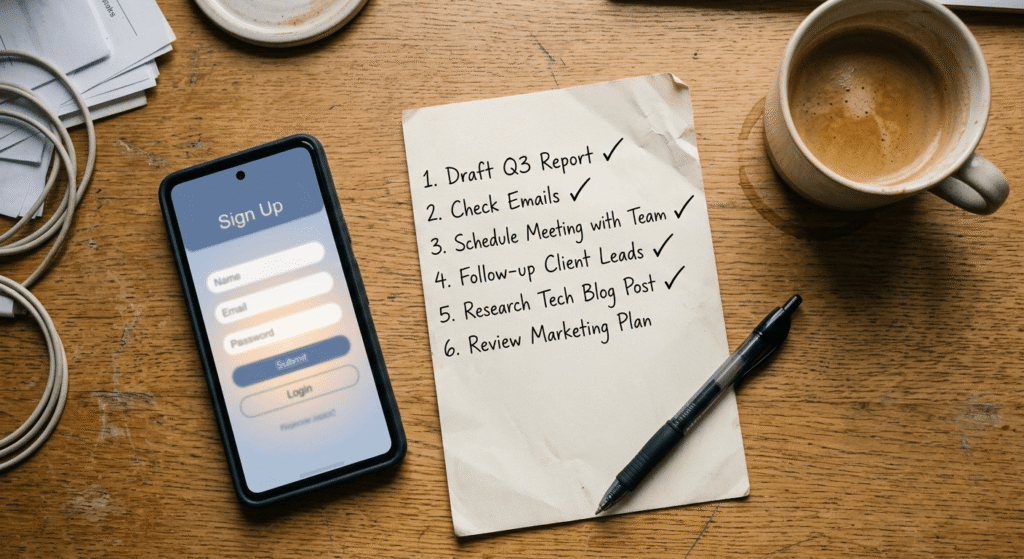
This is the single biggest giveaway in any AI tools scam checklist. Genuine free tools — ChatGPT’s free tier, Google Gemini’s free plan, DeepSeek’s chat — let you start using the product with just an email address. If a tool insists on your card number “for verification only” before you’ve tried a single feature, that’s a classic subscription trap: you get billed automatically once the trial ends, often with no real warning.
Practical tip: If a card is unavoidable, use a virtual card with a low limit, and set a phone reminder to cancel before the trial period ends.
2. Is There Real Company Information Behind It?
Search the company name, not just the app name. Legitimate AI companies have a genuine “About” page, a support email that isn’t a random Gmail address, and usually a LinkedIn presence for their founders. If searching the company turns up nothing beyond the tool’s own landing page, treat it as a ghost project. New tools appear almost every week, so checking the latest AI updates in Pakistan can also help you distinguish genuine new platforms from suspicious AI tools.
Common mistake: Assuming a polished, professional-looking website proves legitimacy. Scam sites can look just as clean — design quality alone never confirms trust.
3. How Old Is the Website’s Domain?
You can check this free using a WHOIS lookup tool. A domain registered a few weeks ago that’s already claiming “10,000+ happy users” should raise questions immediately. Established, trustworthy platforms usually have a domain history stretching back several months to a few years.
4. Does It Have a Real Privacy Policy?
Every legitimate platform is required to disclose how it handles your data, which matters even more for AI tools that process everything you type. Open the privacy policy and confirm it names the actual company, states a data retention period, and lists any third parties involved. Generic, copy-pasted policies are a clear warning sign this tool skipped that step for a reason.
5. Is the Pricing Actually Clear?
Direct answer: Legitimate AI tools display their pricing openly, even for paid tiers, so you know exactly what you’re agreeing to before you commit. If a site hides pricing behind a “Contact Sales” button for what should be a simple consumer product, or only reveals cost after payment details are entered, it’s designed to reduce your chance to back out in time.
6. Can You Find Reviews Outside Their Own Website?

This is where many beginners get caught, especially with “AI earning” apps disguised as productivity tools. Check:
- Reddit — search “[tool name] review” or “[tool name] scam”
- Trustpilot or Google Reviews
- YouTube — look for real walkthrough videos, not promotional clips
- Local Facebook groups focused on freelancing or online earning in Pakistan
If the only “proof” available is screenshots the company posted itself, treat that absence of independent reviews as a real signal, not a coincidence.
7. Are the Claims Realistic?
| Claim Type | Likely Real | Likely Scam |
|---|---|---|
| Performance | “Faster drafts, fewer errors” | “10x better than ChatGPT” |
| Earning | “Earn a side income from freelance writing” | “Earn Rs. 5,000 daily guaranteed” |
| Features | “Generates 5 images per day free” | “Unlimited everything, forever free” |
When an unfamiliar AI tool makes claims that sound too good to be true, you can also follow this 5-step fact-checking process for AI news before accepting the claim as genuine.
Vague superiority claims with no demo, no comparison data, and no independent benchmark are one of the most consistent patterns across low-quality AI tools trying to appear bigger than they actually are.
8. What Permissions Is the App Requesting?
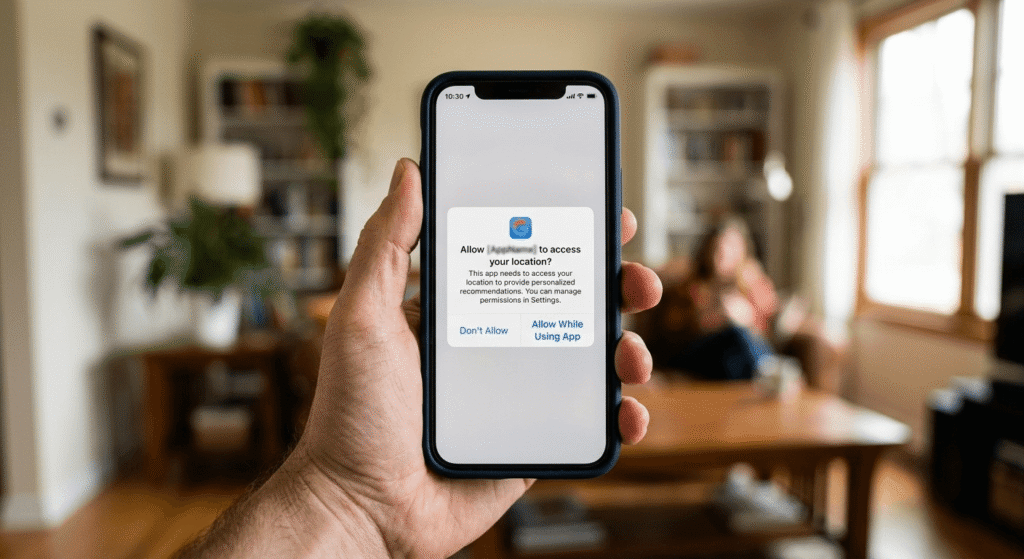
If you’re installing a mobile version, pay close attention to install-time permission requests. A writing or image-generation AI tool has no legitimate reason to request access to your contacts, SMS messages, or call logs. This is one of the most overlooked steps in any free AI tools scam checklist — and one of the riskiest, because it shifts the danger from “wasted money” to “harvested personal data.” New update-related scams are also becoming a problem, so read our fake AI update scam alert in Pakistan before downloading an unfamiliar AI app or APK.
9. Is There a Clear Refund or Cancellation Policy?
Search the site for “refund,” “cancel subscription,” or “billing support” before signing up, not after. If none of that information exists anywhere on the site, and there’s no visible customer support channel, assume cancelling later will be deliberately difficult. For many low-quality tools, that difficulty is the actual business model.
10. Does the Social Proof Actually Check Out?
Fake testimonials share familiar patterns: stock photos used as “user” pictures, first names only with no verifiable profile, or nearly identical phrasing repeated across multiple “reviews.” Cross-check a couple of names or specific claims with a quick search. When every positive mention exists only inside the tool’s own marketing pages, that consistency itself becomes the red flag.
AI Tools vs. AI Earning Apps: Know the Difference
A lot of confusion in Pakistan comes from mixing up two different categories, and this distinction matters as much as any single item on this free AI tools scam checklist.
| Category | What It Actually Does | Realistic Expectation |
|---|---|---|
| AI tools (ChatGPT, Gemini, Claude, DeepSeek) | Help you write, code, design, or research | You do the work; the tool assists |
| “AI earning apps” | Claim the AI itself generates income for you | Usually a red flag — genuine income still requires your effort, skill, or a real client |
Once you’ve verified that an AI tool is legitimate, our guide to free AI tools Pakistani freelancers actually use can help you choose practical tools for real freelance work.
If a platform blends both ideas — an “AI tool” that also promises guaranteed daily payouts just for using it — treat that combination as a stronger warning sign than either claim alone. If you’re specifically evaluating earning platforms, our guide to AI earning apps that actually pay to JazzCash and Easypaisa explains which options are worth checking and what payment signs to verify.
Pros and Cons of Free AI Tools
Pros:
- Many genuinely free tools exist in 2026 (ChatGPT, Gemini, DeepSeek, Claude free tiers)
- No investment needed to start building AI skills
- A strong entry point for students and freelancers across Pakistan and Asia
Cons:
- Free tiers often come with usage limits (message caps, slower response times)
- Some “free” tools use the word as a hook for auto-billing later
- Data privacy standards vary significantly between providers, so checking always matters
For users with older phones, it’s also worth checking AI tools for low-RAM Android phones before installing unfamiliar AI apps that may consume too many resources.
A Common Scam Pattern to Recognize
A pattern that repeats often in this space looks like this: an “AI writing” or “AI earning” tool gets heavily promoted through Instagram or TikTok ads featuring countdown timers and phrases like “limited spots” or “AI writes and earns for you.” The landing page shows unrealistic returns, the signup form requests card details “for verification,” and a quick search turns up no company presence beyond that one ad campaign.
This exact combination — urgency, vague ownership, and payment requested before any real value is delivered — shows up consistently across reports on AI tool scams. Before trusting any tool promoted as completely free, you can also compare it with our guide to free AI tools without a credit card to find options that don’t require payment details upfront. None of these signals alone proves a scam; together, they’re close to a confirmed one. That’s the real value of running through a full free AI tools scam checklist instead of judging a tool on just one factor.
Expert Recommendation
If you’re new to AI tools in Pakistan, start with platforms that have a well-documented free tier and a long track record — ChatGPT, Google Gemini, Claude, and DeepSeek are consistently cited as safe starting points because their pricing and policies are public and stable. Run any unfamiliar tool through this checklist first, and avoid linking your primary bank account or main JazzCash/Easypaisa number to an unverified platform — use a secondary account wherever possible.
If regional access is another concern, see our guide to AI tools that work without a VPN in Pakistan before choosing an unfamiliar platform.
Common Mistakes to Avoid
- Signing up during a countdown timer or “limited offer” without checking the company first
- Assuming a good-looking app or website automatically means it’s trustworthy
- Ignoring app permission requests during installation
- Skipping a quick “[tool name] + scam” search before signing up
- Using a primary payment method instead of a secondary one for unfamiliar tools
If you’re looking for genuinely accessible options rather than questionable apps, our list of free AI tools without sign up can help you find tools that don’t require unnecessary registration.
Frequently Asked Questions
Is it safe to give my email to a free AI tool? Generally yes, if the platform has a clear privacy policy and doesn’t require payment information. Use a secondary email for tools you’re testing for the first time. If you want to explore AI without unnecessary signup requirements, see our guide to Free AI Tools Without Sign Up for beginner-friendly options.
Do legitimate AI tools ever ask for a credit card? Some do, mainly to prevent bot signups or enable a smooth upgrade path, but they disclose this clearly upfront. The problem isn’t the request itself — it’s a lack of transparency around it.
Can an AI tool steal my data even if it’s free? Yes, if its privacy policy allows broad data sharing or the app requests unnecessary permissions. Free doesn’t mean risk-free, so checking data access always matters.
How can I check if an AI tool company is real? Search the company name — not just the tool name — on Google and LinkedIn, look for a real address or team page, and check domain age with a WHOIS lookup tool.
Are AI tools that skip the VPN requirement in Pakistan automatically safer? No. VPN requirements relate to regional access, not trustworthiness. A VPN-free tool can still be a scam, so the rest of this checklist still applies.
What should I do if I already signed up for a suspicious AI tool? Cancel any linked payment method immediately, change your password if you reused one elsewhere, and monitor your bank or JazzCash statement for unexpected charges over the next billing cycle.
Are “AI earning apps” trustworthy in general? Treat guaranteed-payout claims with extra caution. Genuine income connected to AI skills usually comes through recognized freelance platforms, not standalone apps promising fixed daily earnings.
How often should I re-check a tool I already use? Revisit its privacy policy and pricing page every few months — terms can change quietly, and a tool that was trustworthy at signup can shift its policies later.
Conclusion
Not every free AI tool is a scam. Some of the best tools available right now — ChatGPT, Gemini, and DeepSeek among them — are genuinely free to start with. The purpose of this free AI tools scam checklist isn’t to make you avoid AI altogether; it’s to give you a fast, repeatable way to separate real tools from traps before you hand over your email, your data, or your payment details.
As AI tools continue to multiply through 2026, scam tactics will likely get more convincing — better fake reviews, more polished landing pages — but the core checks in this free AI tools scam checklist will stay effective: verify the company, read the actual policies, look for reviews outside the tool’s own website, and question any claim that sounds too good to check. Run through these 10 checks before your next signup, and you’ll avoid the overwhelming majority of AI tool traps out there.