
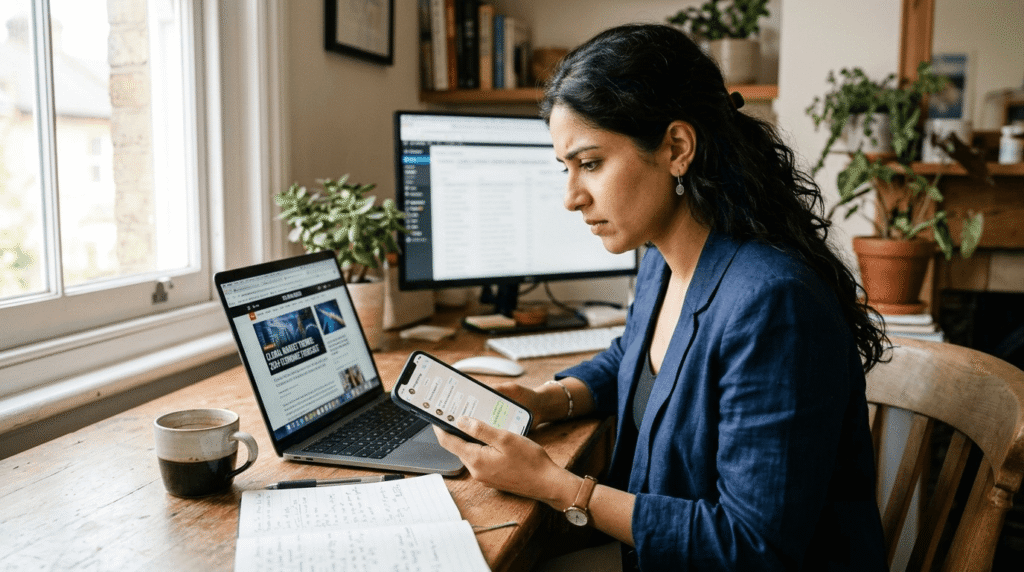
Last month, a claim about a “new free AI tool for Pakistani students” started circulating in a Facebook group I’m part of. It had over 300 shares in two days. No official source. No working link. Just a screenshot and a caption written to sound urgent.
I didn’t publish it. And that decision came from a process I now use every single time I need to verify AI news before publishing anything on AiZonePro.com.
I’m Ismail, founder of AiZonePro.com. I write AI news roundups, tool guides, and scam-alert content for beginners in Pakistan every week. That means readers trust me to check things before they read them — not after. This article walks through the exact five-step process I use to verify AI news before publishing it, including the tools I check with, the mistakes I’ve made along the way, and where this process still has limits.
By the end, you’ll have a repeatable checklist you can use whether you run a blog, manage a page, or just want to stop forwarding fake news on WhatsApp.
Quick Answer: What Does It Mean to Verify AI News Before Publishing?
To verify AI news before publishing, you trace a claim to its original source, confirm it through at least two independent outlets, check any numbers or quotes against the original document, and inspect images or videos for signs of AI generation. If a claim fails any of these checks, it doesn’t get published as fact — it either gets held, rewritten as “unconfirmed,” or dropped entirely.
Why This Problem Is Bigger in 2026 Than Ever
AI-generated text and images have gotten good enough to fool a casual reader in seconds. Research on Urdu-language misinformation has shown that automated detection models can now flag fake news with high accuracy — which tells you something important: this problem is common enough that researchers built dedicated systems for it, and even those systems still need human review to catch what they miss.
In Pakistan, this shows up constantly. Fact-checking groups have repeatedly traced viral “photos” from protests, rescues, and accidents back to AI image generators, not real cameras. A WhatsApp forward about a bank policy, a Facebook post about a scholarship, a YouTube thumbnail claiming a tool is “banned” — a lot of it is fabricated, and AI just made it faster to produce and harder to spot. The same verification habit is useful when checking suspicious update messages; our guide to fake AI update scam alerts in Pakistan explains the warning signs beginners should check before clicking or downloading anything.
If you publish or share something false, even by accident, you lose the one thing that keeps readers coming back: trust. That’s why I treat verification as non-negotiable, not optional polish.
My 5-Step Process to Verify AI News Before Publishing
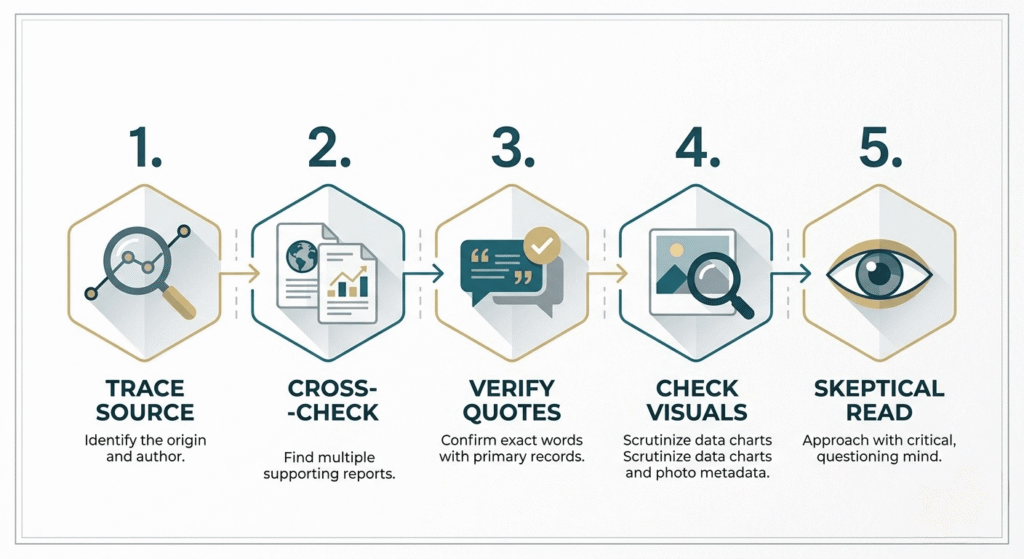
This is the actual checklist I run through before any AI-related story goes live. If a claim doesn’t pass a step, it doesn’t move forward until it does.
Step 1: Trace the Claim to Its Original Source
Direct answer: Before writing anything, find where the claim first appeared — not the version that’s been shared the most, but the original one.
AI chatbots sometimes summarize claims without a clear source, and occasionally attach one that doesn’t actually exist. So my rule is simple: no traceable original source, no publish.
How I do this:
- Search the exact claim in quotation marks
- Sort by date to find the earliest mention, not the most viral one
- Look for the primary source — an official statement, company post, or verified account
This is especially important when covering new AI tools without VPN in Pakistan, because availability and access claims can change quickly and should always be confirmed from an official source.
This is particularly important when researching new AI tools without VPN in Pakistan, because regional availability and free-access claims can change quickly.
Step 2: Cross-Check With Two Independent Sources
Direct answer: One source is never enough. A claim only counts as verified once two genuinely separate outlets confirm it — not two sites copying the same press release.
I specifically check whether the second source did its own reporting or just reworded the first one. If every “source” traces back to the same original post, that’s still one source, not two.
Step 3: Verify Every Quote and Statistic
Direct answer: Every number or quote in an article should be checked against its original document before it’s published, not copied from a summary.
This is where I’ve personally caught the most AI-generated errors. A chatbot might cite a real statistic but attach the wrong year, or generate a quote that sounds plausible but was never said. If I can’t trace a number back to where it came from, I remove it rather than guess.
Step 4: Check Images and Videos for AI Generation
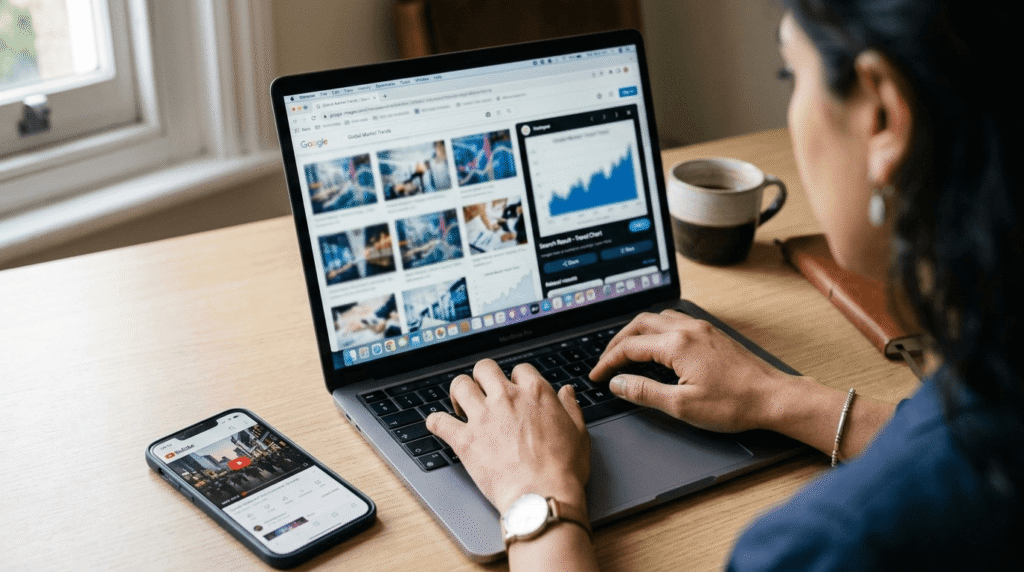
Direct answer: Run suspicious images through a reverse image search, and look for common AI tells — distorted hands, warped backgrounds, inconsistent shadows, or garbled text.
This step has become essential in 2026. Pakistani fact-checking organizations have repeatedly identified viral images shared as “real photos” that were actually AI-generated. Before I use any image tied to a news claim, I reverse-search it and examine it closely rather than trusting it at a glance.
Step 5: Do a Skeptical Final Read
Direct answer: Reread the story trying to disprove it, not confirm it. If the language feels dramatic, emotionally charged, or too convenient, slow down and check again.
AI-generated misinformation is often written specifically to trigger a reaction, because that’s what gets shared fast. My last check before publishing is simple: does anything here feel designed to provoke rather than inform? If yes, I hold it. When the claim involves an unfamiliar free AI platform, I also recommend running it through a free AI tools scam checklist before signing up or sharing personal information.
Summary Table: The 5-Step Verification Process
| Step | What I Check | What It Catches |
|---|---|---|
| 1. Trace the source | Original document or statement | Claims with no real origin |
| 2. Cross-check sources | Two independent, credible outlets | Copied or single-source misinformation |
| 3. Verify quotes and stats | Original study, transcript, or record | AI-invented or misattributed numbers |
| 4. Check images and videos | Reverse image search, visual detail | AI-generated visuals passed off as real |
| 5. Skeptical final read | Tone, framing, missing context | Emotionally manipulative fake stories |
Real Case: How This Process Stopped Me From Publishing a False Story
Here’s a specific example from my own workflow. While researching a weekly AI news roundup, I came across a post claiming a popular AI writing tool had quietly removed its free tier for users in Pakistan. The post had screenshots and looked convincing.
I ran it through Steps 1 and 2. The original “source” turned out to be a single Reddit comment with no link to an official changelog, support page, or company announcement. A second search found other blogs repeating the same claim — all citing that same Reddit comment, not independent confirmation. That meant it failed Step 2 completely: one source, dressed up as several.
I held the story. Two days later, the tool’s own support page confirmed the free tier was still active, with no such change. Publishing on day one would have meant sending inaccurate information to readers who plan their work around these tools. That’s the exact kind of mistake this process exists to prevent. This matters even more for freelancers who depend on AI tools for daily client work, which is why our guide to free AI tools Pakistani freelancers actually use focuses on tools tested in real freelance workflows.
Common Mistakes Beginners Make When Verifying AI News
- Trusting polish over proof. A clean website or professional-looking screenshot says nothing about accuracy.
- Assuming AI chatbots fact-check themselves. They can sound completely confident while stating something false.
- Skipping image verification. Readers trust photos more than text, which makes fake images more dangerous, not less.
- Treating “two sources” as two links. If both trace back to the same origin, that’s still one source.
- Publishing fast instead of publishing right. Being first is never worth publishing something wrong to your audience.
Pros and Cons of Using AI Tools During Fact-Checking
| Pros | Cons |
|---|---|
| Speeds up initial research and summarizing | Can produce confident but inaccurate summaries |
| Helps flag which claims need deeper checking | Cannot independently confirm real-world facts |
| Useful for spotting patterns across sources | Sometimes cites sources that don’t exist |
| Saves time on repetitive research tasks | Still needs human judgment for the final call |
Expert Recommendations for Beginners in Pakistan
- Check the publish date before sharing anything — old news often resurfaces disguised as breaking news
- Keep two or three trusted sources you check by default, instead of relying on whatever appears in your feed
- Run a reverse image search before trusting any viral photo — it takes under a minute
- Treat WhatsApp forwards as unverified by default, no matter who sent them
- Use AI tools as research assistants, not as the final word — the judgment call is still yours
Students can apply the same approach when choosing tools for study and assignments, starting with our guide to the best free AI tools for students before relying on any new platform.
Where This Process Has Limits
No verification method is perfect, and I’d rather be upfront about that than oversell it. This process struggles most with real photos used in a false context — for example, an authentic image from one event mislabeled as another. It also takes time, which is a genuine challenge when covering fast-moving AI news where speed matters. This five-step process significantly lowers the risk of publishing false information, but it doesn’t eliminate it completely. That’s exactly why Step 5 — the skeptical final read — matters so much. It’s the last line of defense for claims that technically pass but still feel wrong.
Frequently Asked Questions
How can I tell if a news article was written by AI? Look for generic phrasing, no named or traceable sources, and confident claims that can’t be verified. AI-written news often reads smoothly but lacks the specific, checkable details a real reporter would include.
Is it safe to rely on AI chatbots for news updates? No, not on their own. They’re useful starting points, but they can summarize outdated or incorrect information confidently. Always confirm important claims through an original source before trusting them.
What are the biggest red flags in AI-generated fake news? Missing named sources, statistics with no clear origin, emotionally dramatic language, and images with visual inconsistencies like distorted hands or mismatched lighting.
How do I check a viral image without paid tools? Use a free reverse image search to find where the image first appeared, and look for common AI artifacts like blurred text or unnatural shadows.
Why does this matter especially for readers in Pakistan? Misinformation spreads fast through WhatsApp and Facebook groups here, and fact-checkers have repeatedly found AI-generated images shared as real events, which makes personal verification skills essential.
How long does this process actually take? Most claims take five to ten minutes to verify properly. That’s a small cost compared to the damage a false published story does to your credibility.
Can AI tools actually help with fact-checking instead of causing the problem? Yes, some AI tools can help trace claims and flag likely AI-generated content, but they support the process — they don’t replace the human judgment call at the end.
What should I do if I can’t verify a claim either way? Don’t publish it as confirmed fact. Either hold it until you can verify it, or clearly label it as unconfirmed so readers know the difference.
Conclusion
Learning to verify AI news before publishing isn’t optional anymore — not for bloggers, not for students sharing updates, and not for anyone building an audience that depends on trust. The five steps I use — tracing the source, cross-checking independently, verifying quotes and numbers, inspecting images, and doing one final skeptical read — have consistently kept false information off AiZonePro, including the tool-removal story that never actually happened.
As AI-generated content keeps improving through 2026, the gap between real and fake will keep shrinking, which makes this skill more valuable, not less. Start with one habit from this process, like tracing a claim to its original source before you share it, and build from there. If you regularly follow AI developments in Pakistan, you can also use our weekly AI news roundup for Pakistan as a starting point and then verify important claims yourself before sharing them. Do it consistently, and verifying AI news before publishing stops being extra work — it becomes exactly how you work.